
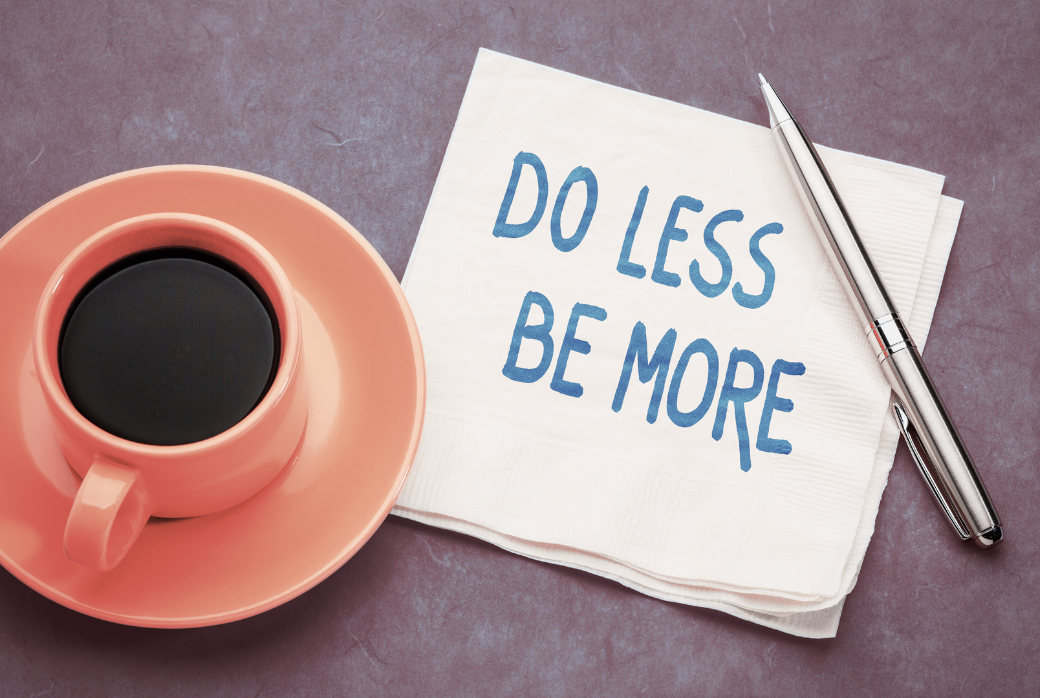
Doing Less to Achieve More ~
Rethinking Team Performance for 2026
Creating space for clarity, resilience and wellbeing
The way we work has changed.
Now, the way we think about performance needs to change too.
As we move through 2026, more leaders are questioning what really drives high-performing teams. Not new tools. Not moving faster. And not pushing people harder to keep up.
The shift that matters most is less obvious – and far more powerful. It’s about how we create and sustain performance by making space for better thinking, learning and wellbeing.
Performance Isn’t About Pushing Harder
Teams today are working incredibly hard. And yet, beneath the effort, performance often feels more fragile than it should.
🪫Decision-making slows.
🪫Energy dips.
🪫Leaders feel pressure to have answers.
🪫People are coping, not thriving.
It’s tempting to see this as a motivation or capability issue. In reality, many teams are still being led using familiar models that no longer fit today’s conditions.
Leadership built on constant urgency, tight control, expertise as the answer, and relentless speed – what I often describe as zombie leadership – keeps going not because it works, but because under pressure, people default to what feels familiar.
The cost is subtle but significant. Thinking narrows. Learning slows. And performance becomes brittle rather than resilient.
What’s missing is not effort.
It’s space.
The Counterintuitive Power of Doing Less
High-performing teams are recognising something important – more busyness does not create more progress.
Activity is not a substitute for clarity.
The most effective leaders are not those with answers to everything. They are the ones who facilitate better thinking, ask stronger questions, and slow things down just enough for reflection and learning to happen. Creating space matters.
💡Space to think.
💡Space to prioritise.
💡Space to notice what’s really going on.
As A. A. Milne illustrated so perfectly through Winnie-the-Pooh, when you keep bumping your way down the stairs, you never stop to consider there might be another way.
Organisations repeat patterns because they are familiar, not because they deliver results. Busyness has quietly become a proxy for value – and it is draining judgement, creativity and wisdom.
Quality flourishes in the space leaders create. Without it, effort multiplies but impact fades.
Redistributing Thinking and Building Psychological Safety
Traditional leadership has long rewarded decisiveness and expertise. In complex systems, this often bottlenecks thinking and limits performance.
High-performing teams distribute thinking.
✅ Questions are welcomed.
✅ Challenge is normalised.
✅ Psychological safety is not optional.
This shift can feel uncomfortable, particularly for experienced leaders who have built their identity around certainty and competence. But without it, teams struggle to adapt, learn or perform well under pressure.
Facilitating thinking is not a soft skill. It is a performance capability.
Wellbeing as a Performance Advantage
There is also a very human cost to the relentless pace of work – cognitive overload.
When people are constantly “on”, judgement deteriorates, emotional regulation suffers, and learning shuts down. No app, supplement or productivity hack fixes this.
Only intentional leadership does.
High-performing teams understand that energy and attention are finite resources. Leaders who protect them are not being soft – they are being strategic.
This is the point where wellbeing stops being a separate conversation and becomes inseparable from performance. Sustainable results depend on people who are able to think clearly, regulate emotions, and recover.
Key Actions to Shift Team Performance
As you reflect on your own team, consider:
- Where are we defaulting to speed when clarity is what we actually need?
- Where is quick decision-making crowding out good thinking?
- Where might we be mistaking relentless activity for real progress?
Practical steps that make a difference include:
- Fewer, better meetings – with ruthless clarity of purpose
- Pauses built into decisions – not delays, but moments to reflect
- Shifting from giving answers to asking questions like, “What might we be missing?”
- Protecting energy, not just output – and noticing signs of overload
- Modelling doing less, so others feel permission to do the same
Final Reflection
Sustainable high performance does not come from pushing harder.
It comes from leading differently – with space, intention and wisdom.
As you look ahead to 2026, ask yourself:
Where could you step back and let others think more clearly?
What would change if doing less became a leadership strength in your team?
If this resonates and you’d like to go deeper, get in touch.
Click here to listen to me talk about this topic.

